
Point 1920
Rope wound by hand around a powder-coated aluminium frame. Grade A teak left in its natural finish so it can silver in the sun rather than be sealed against it. Point 1920 has been building outdoor furniture this way since the year in its name, through the same craft families, and a century of that patience is what the catalogue is made of.
What started in rattan now runs through teak, hand-wound rope, woven outdoor fibre, Batyline mesh and powder-coated aluminium in a dozen named colours, finished with tops in porcelain or compact HPL. The Pal, Paralel, Weave, Long Island, Origin and Heritage ranges carry it across a terrace: low lounge chairs and modular sofas, sunloungers that sit flat beside the water, dining tables long enough for a whole evening. Every piece is built to order in the frame, top and fabric grade you choose.
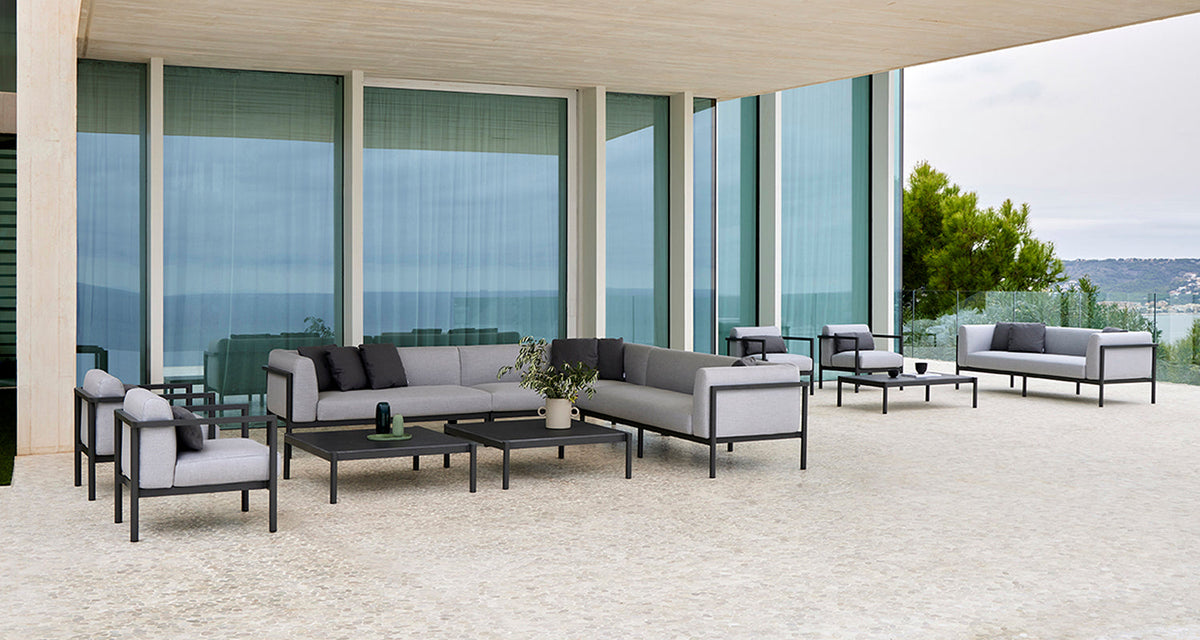
Pictured: Origin Coffee Table by Point 1920


Similar Collections
Discover curated collections for every space in your home
Frequently Asked Questions
How Long Does Point 1920 Furniture Take to Arrive?
Every piece is built to order, so plan on about 10 to 12 weeks from the day the order is confirmed to the day it leaves the factory in Spain, plus transit and delivery here. Contact us before ordering and we will confirm the frame, top and fabric you want are available on the current run. Nothing in the range sits in a warehouse, which is also why the finish combinations are as open as they are.
Can Point 1920 Furniture Be Returned?
No. Point 1920 furniture cannot be returned once it has been purchased and delivered. Two things drive that: each piece is made to order in the exact frame and fabric you choose, and a return would mean sending a large crate back across the Atlantic, at a cost that would exceed much of the order. So use the dimensions, the finish names and our help before you commit rather than after. We are glad to talk a combination through.
What Are the G1, G2 and G3 Fabrics?
G1, G2 and G3 are Point 1920's fabric groups, and the group sets the price rather than the quality of the tailoring. Point 1920 gives its fabrics reference numbers rather than colour names, so the group is the useful thing to understand:
Group 1 is the core range, four references of 100 percent solution-dyed acrylic at around 300 g/m2 and 20,000 Martindale rubs. Solution-dyed means the colour is added to the fibre while it is still liquid, so it runs right through rather than sitting on the surface, which is why these hold their tone through a season of direct sun.
Group 2 is the same acrylic construction and the widest choice by far, around thirty references covering the deeper colours, the textures and the larger weaves.
Group 3 splits in two. Seven of its references are heavier solution-dyed acrylics, roughly 545 g/m2, with the highest interior light fastness Point publishes and fire certification to NFPA 260 Class 1, CAL TB 117 and BS 5852, which is what makes them the usual choice for restaurants and hotels. The other four are the Batyline-type meshes, a PVC-coated polyester and acrylic rated to 50,000 Martindale rubs, used as a taut sling on loungers and dining chairs rather than as a cushion cover.
Every group is water repellent, bleach cleanable, stain and mould resistant, free from PFAS, REACH compliant, and carries a five-year warranty from Point. Where you see Foam Only or Without Cushion on a product, those are genuine choices, and you can also supply your own fabric.
How Do I See a Fabric Before I Order?
Ask us. Because the references are numbers and not names, and because screens render colour differently anyway, the only reliable way to judge one is against a physical sample. Tell us the piece and the group you are considering and we will send Point 1920's current fabric catalogue and arrange swatches. This matters more here than on most of the shop: Point 1920 is made to order and cannot be returned, so the fabric decision is worth slowing down for.
Will the Teak Turn Grey?
Yes, and Point 1920 designs for it. They work only in grade A teak from FSC-certified forests and deliberately apply no stain, oil or sealer, so the surface oxidises and settles into an even silver-grey over the first season. That layer is protective. It does not weaken the timber, whose own oils sit inside the grain. If you would rather skip the wait, several ranges offer a Weathered Teak finish that arrives already greyed.
Which Tabletop Should I Choose?
Porcelain for a stone look with almost no upkeep, in Natural White, Lava Grey, Basalt Grey, Ochre Grey and a marbled off-white. Compact HPL for a thinner, matt, very hard-wearing edge, in beige, black, solid white, taupe, marbled white and a wood print. Natural teak where you want the top to match a teak frame and weather with it. All three live outdoors year-round; the porcelain and the HPL are the easier ones to wipe down after a meal.
How Do I Clean the Rope and Woven Fibre?
Warm water, mild soap and a soft cloth or sponge, then let it dry fully in the open air. For a stubborn mark, a mild detergent made for synthetic textiles is fine. Avoid abrasives and solvents, which attack the fibres. The rope is high-resistance polyester and the woven fibre is a UV-stabilised synthetic, so neither rots nor absorbs water, but dirt left sitting in the weave is what dulls the colour.