
Modern Dining Room Furniture
The dining room is the only room in the house built around sitting still. Everything in it exists to keep people in their chairs a little longer: the table they lean on, the light that falls on it, the sideboard that means nobody has to get up for more wine.
A table is where that starts. Ethnicraft works solid oak and teak without veneer, so the grain you run your hand across is the timber itself and the piece can be sanded flat again in thirty years. Copeland mills American cherry and walnut in Vermont, and cherry has the quiet trick of darkening for years after it arrives, so the table you own at ten is richer than the one you bought. Extendable Italian designs from Connubia do the other job entirely: four people most nights, eight at Christmas, with no leaf to store in a cupboard.
Then the things that make the room rather than fill it. A pendant hung low enough to pool light on the table and leave the rest of the room soft. Chairs you actually want to stay in. A sideboard doing the unglamorous work of hiding everything.
We have been selling modern furniture since 2009 and online since 2019, which is long enough to know that the pieces people write to us about years later are rarely the dramatic ones. Not sure what size table your room will take, or how many chairs will fit around it? The questions below have the measurements.
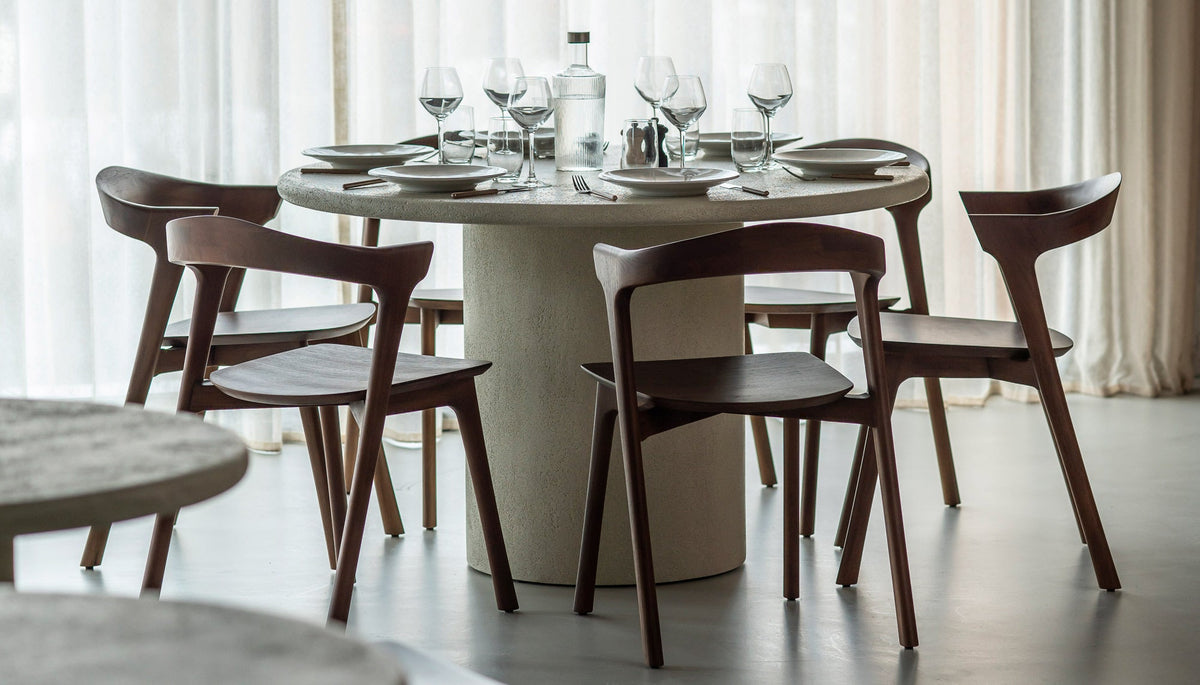
Pictured: Elements Dining Table by Ethnicraft


Similar Collections
Discover curated collections for every space in your home
Frequently Asked Questions
What Size Dining Table Fits My Room?
Measure the room, then subtract 36 inches from each side for chairs and walking space. A 12 by 14 foot room leaves roughly 72 by 96 inches of usable footprint, which takes a table up to about 72 inches long. If people need to walk behind seated guests, allow 48 inches on that side instead of 36. Most people buy a table that is slightly too big rather than too small, and it is the error you feel every day.
How Much Clearance Do I Need Around a Dining Table?
Thirty-six inches from the table edge to the nearest wall or furniture is the working minimum. That is enough to pull a chair out and sit down. Forty-eight inches is what you want on any side people regularly walk along, or where a sideboard sits and drawers need to open. Below 30 inches the room stops working, no matter how good the table is.
What Is the Difference Between a Sideboard, a Credenza and a Buffet?
The words are used interchangeably now, but the distinction is useful. A buffet is taller with legs, made for serving at standing height. A credenza sits lower and longer, often with sliding doors, and came from office furniture. A sideboard falls between the two and is the term most makers use today. Choose on height and storage type rather than the name: doors suit platters and linen, drawers suit cutlery.
Do Dining Chairs Have to Match the Table?
No, and the rooms that look considered rarely match exactly. The reliable approach is to share one element and vary the rest. A walnut table with black metal chairs works because the metal picks up the legs; an oak table with upholstered chairs works because the tones sit in the same family. What does not work is two woods that are close but not the same. Either match properly or contrast clearly.
Can I Mix Wood Tones in a Dining Room?
Yes, and most rooms end up doing it. Keep to two or three tones, make sure one dominates, and repeat each tone at least twice so it reads as a decision. Undertone matters more than shade: warm oak and warm walnut sit together comfortably, while a cool grey-washed oak beside a red-toned cherry will fight. A rug or a run of lighting underneath will tie disparate woods together better than trying to match them.
How Do I Care for a Solid Wood Dining Table?
Wipe spills promptly, use mats under anything hot, and keep it out of direct sun, which lightens some woods and darkens others unevenly. Oiled finishes want re-oiling once or twice a year and can be spot-repaired, which is why scratches matter less on them. Lacquered and hardwax surfaces need less upkeep but mark permanently when they do mark. A solid top can be sanded and refinished decades later; a veneer generally cannot.